.webp)

Knowing the thickness of the flap discs is important when choosing abrasive tools for working with metal because it affects how well they grind and how much they cost. The thickness has a direct effect on how fast stock is removed, how well the surface is finished, and how long the tool lasts. Choosing the right thickness for the job, like heavy metal grinding, exact stainless steel finishing, or general deburring, will help you get the most work done for the least amount of money. This guide will look at how thickness advice change for different metalworking situations so that purchasing managers, engineers, and dealers can make smart buying choices.
Understanding Flap Disc Thickness and Its Impact on Metal Fabrication
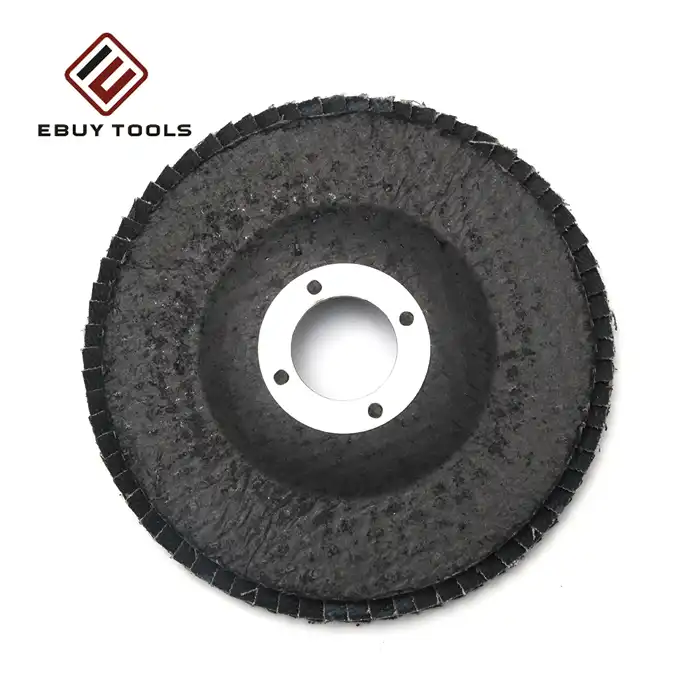
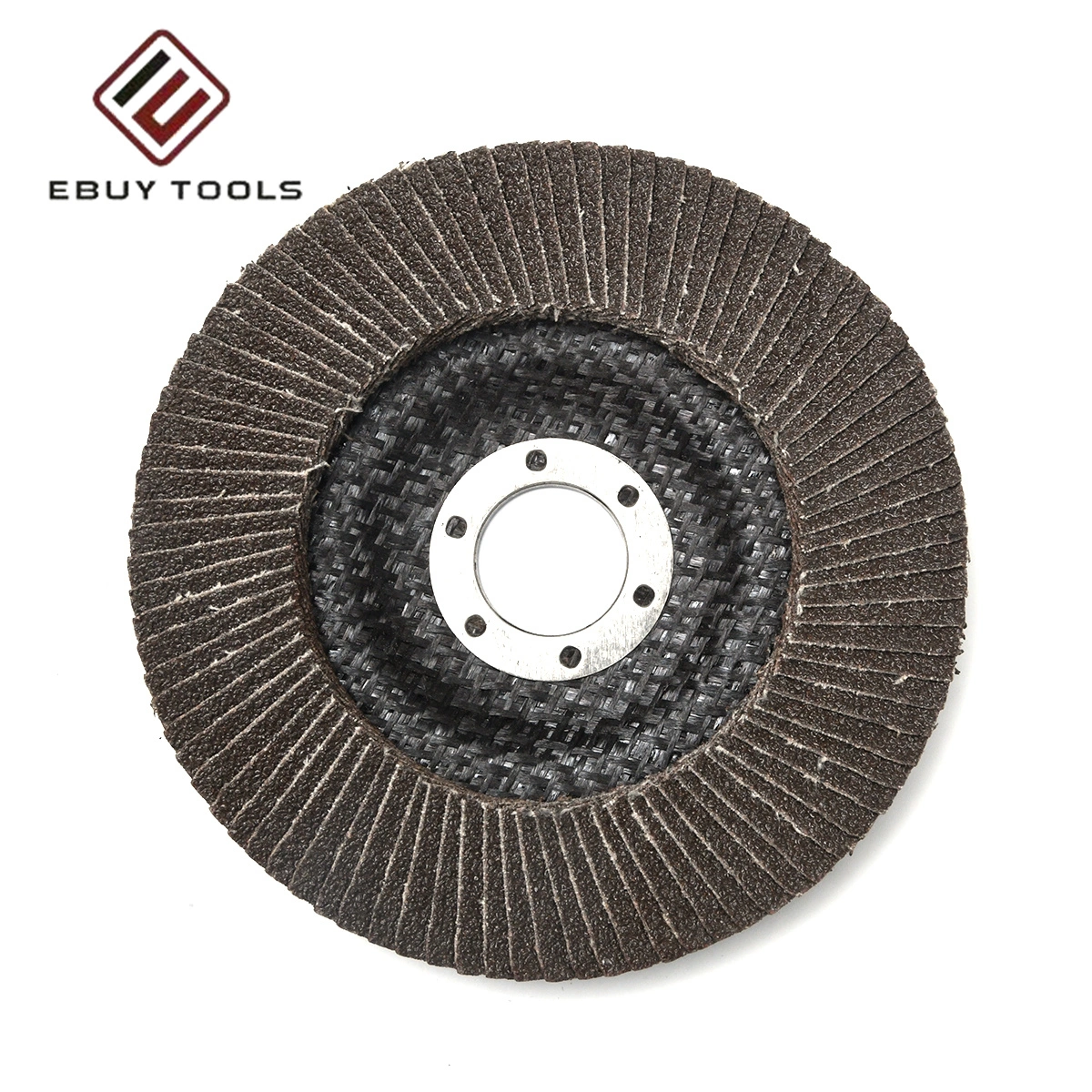
When working with metal, the thickness of a rough grinding tool is very important for how well and quickly you can do your work. Our engineering team at Danyang Ebuy Tools has seen that thickness affects three important performance factors: how fast material is removed, how well heat is dissipated, and how long the disc lasts overall. Options that are thicker, usually between 4mm and 6mm, are more durable and last longer, which makes them perfect for rough grinding on hardened steel or thick weld beads. These strong versions can handle higher grinding pressures without wearing out too quickly, which means that fewer tool changes are needed during long manufacturing runs.
On the other hand, smaller profiles often between 2mm and 3mm are easier to move and have better surface finishing. Because of these qualities, they are very useful for tasks like cleaning, removing paint, or working with non-ferrous metals that aren't very hard, like aluminum, where too much thickness could cause the surface to gouge. These effects are greatly boosted by the way thickness and grit choice interact with each other. When used with coarse 36 or 40 grit specs, our zirconia alumina abrasive formulations and thicker backing plates do a great job of removing heavy stock. On the other hand, our thinner ceramic alumina versions with 80 or 120 grit do a great job of blending the surface of heat-sensitive stainless steel.
The type of metal also has a big effect on the width needs. To do the strong material removal needed for weld preparation and edge chamfering, carbon steel production usually needs grinding tools that are thicker and more durable. Our Type 29 conical shape with strengthened fiberglass backing keeps the structure strong in these tough situations. Thinner, higher-density ceramics that keep heat from building up and stop oxidation coloring are better for handling stainless steel in the production of food-grade or pharmacy equipment. By balancing these factors, manufacturers can get the best results in terms of both efficiency and surface quality, while also keeping costs low.
Selecting the Right Flap Disc Thickness for Various Metal Fabrication Applications
To match the right abrasive tool specifications to your metalworking needs, you must first understand how thickness, material properties, and job goals are related. As a company that makes tools, Danyang Ebuy Tools has learned that for steel and stainless steel, you need choices that are 4mm to 6mm larger in order to do heavy surface preparation and weld grinding jobs well. The overlapping flap design and thick backing plate give the structure the rigidity it needs to keep cutting even when under pressure, which is especially important when removing heavy weld lines on I-beams or pipeline building parts.
Non-ferrous metals have different problems that can be solved by using different thickness methods for flap discs. When working with aluminum, copper, and brass, shapes that are smaller by 2mm to 3.5mm usually work better. These requirements lower the chance of surface gouging while still allowing enough freedom to fit around odd forms. Our Type 27 flat design with middling thickness lets operators prepare a flat surface for paint adhesion in a car body panel without changing geometric standards or making swirl patterns that aren't needed.
Task-driven factors improve methods for choosing thickness even more. When you need to remove a lot of material, like casting flash, mill scale, or uneven weld surfaces, you should use thicker abrasive tools with coarse 36 or 40 grit specs. The combination aggressively removes stock, and the strengthened backing plate effectively absorbs sound, which keeps operators from getting tired during long grinding sessions. Our zirconia alumina mix keeps the disc's cutting ability high throughout its useful life by revealing new, sharp abrasive grains as the gaps wear down.
For delicate finishing tasks, you need to use a completely different method. Thinner profiles paired with 80 or 120 grit choices give better results for jobs like surface blending, rust removal, and pre-paint preparation. When making pharmaceutical tanks, our ceramic alumina versions with high-density flap patterns blend TIG welds smoothly without leaving behind heat-induced oxidation zones that could weaken the materials' ability to resist corrosion. The thinner shape makes it possible to grind with controlled accuracy, which protects the metal structure of heat-sensitive materials while meeting the tight surface roughness norms needed for sanitary applications.
Using these ideas in the real world at shipyards is a good example of how they work. When hull construction teams work with curved structural steel sections, they start by using thicker Type 29 conical options to get rid of the first weld. Then, they switch to thinner Type 27 flat options to finish blending the surface before applying the coating. This step-by-step method uses the best features of each thickness standard to boost efficiency and finish quality while lowering the total cost of grinding one linear foot of processed weld.
Procurement Strategies for Sourcing Abrasives with Optimal Thickness Specifications
To make good plans for buying industrial abrasive tools, you need to pay close attention to thickness consistency as a basic quality measure that has a direct effect on both project costs and operating performance. Thickness uniformity in big orders makes sure that grinding will behave consistently across multiple machines and production shifts. This gets rid of the problems that come up when tools don't work right the first time. At Danyang Ebuy Tools, our strict quality control systems check that every production batch meets the thickness limits before it is shipped. This gives us the dependability that tough fabrication settings need.
When buying managers look at possible providers for flap discs, they should give more weight to companies that have shown they can do precise abrasive engineering and consistent production processes. Our R&D department is always coming up with new ideas to keep up with changing needs in the industry. At the same time, our large daily production capacity of about 150,000 cutting tools makes sure that we always have enough inventory to meet tight project deadlines. Because we have both the scientific know-how and the manufacturing scale, we can offer consistent thickness that leads to reliable process outcomes in high-volume uses, on par with well-known industry players.
Negotiations for bulk purchases can help you get better terms while still meeting quality standards. When buying a lot of abrasive tools, it's important to pay close attention to the thickness specs so that there aren't any practical inconsistencies that could lower the quality of the workpiece or make it more expensive to fix. Effective supplier partnerships take into account a number of factors, including unit cost, thickness tolerance guarantees, shipping dependability, and the ability to provide expert assistance. Because we can customize, we can make special formulations that meet the needs of each application as long as the minimum order quantity is met. This lets us offer custom solutions that can't be found through normal marketing methods.
When evaluating procurements for flap discs, technical documents and success data should be given a lot of weight. Manufacturers with a good reputation give detailed specs that include standard thickness as well as tolerance ranges, the qualities of the backing plate material, the mix of the abrasive grains, and the best ways to use the product. This openness lets you compare competing goods in a smart way and backs up data-driven purchasing choices. At Danyang Ebuy Tools, we keep the lines of communication open with our customers about product details, and we accept expert consultations to make sure that the right tools are used for the job.
Using vendor qualification methods that include trial evaluations in real production settings is a good way to make sure that performance claims about thickness are true before making big purchases. Structured testing methods should measure important things like how much stock is removed, how long the disc lasts, the quality of the surface finish, and how much heat is generated for common workpiece materials and grinding jobs. This empirical method lowers the risk of buying while boosting trust in the abilities of suppliers. Our team is happy to help customers with their trial programs and will give them expert advice to make sure that the conditions of the tests are exactly like the ones that will be used.
Strategic buying includes more than just making the original purchase choice. It also includes managing the relationships with suppliers over time. Setting up clear ways to talk about quality standards, delivery plans, and performance reviews leads to teams that work together to make things better all the time. When differences in thickness or performance happen, responsive providers look into the root causes in a planned way and take corrective steps right away. This proactive approach to quality management sets manufacturing partners who really care about their customers' success apart from transactional providers whose only goal is to get things done quickly.
Conclusion
It's important to choose the right thickness of flap discs abrasive tool because it affects how well it grinds, the quality of the finish, and the overall cost of fabrication. Procurement managers and fabrication engineers can make the best choices by understanding how thickness affects metal type, task requirements, grit specifications, and backing plate design. Thicker profiles are better for aggressive steel grinding, while thinner profiles offer better finish quality and maneuverability for precision work on heat-sensitive materials. Following the right handling procedures that are in line with thickness specifications will make tools last longer and perform better while keeping workers safe. Buying from manufacturers that are committed to thickness consistency and quality control will ensure reliable results in high-volume production settings.
FAQ
How do I determine the ideal thickness for my specific metal fabrication project?
To choose the right thickness, you need to look at three things: the type of metal you're working with, the task (heavy material removal vs. fine finishing), and the grit specification you need for the surface quality you want. For example, for steel and stainless steel weld grinding, you should use thicker options in the 4mm to 6mm range paired with coarse 36 or 40 grit, while for aluminum finishing, you should use thinner 2mm to 3mm profiles paired with finer 80 or 120 grit. For the best advice for your specific application, you should look at detailed supplier technical data and run tests under normal working conditions. Our technical team at Danyang Ebuy Tools is happy to talk about specific fabrication problems and suggest the best specifications for your needs.
Can using incorrect thickness damage my workpiece or grinding equipment?
If you choose the wrong thickness, it can affect both the quality of the workpiece and the performance of the equipment. For example, too-thin options used for heavy grinding tasks may wear out quickly, which can raise the cost of consumables and cause surface finishes that aren't consistent and need more work. What's more, structural failure of inadequate abrasive tools during high-speed operation poses serious safety risks. On the other hand, too-thick options used for delicate finishing work can cause unwanted heat buildup, which can cause discoloration on stainless steel or metallurgical changes in heat-sensitive alloys. The rigidity of too-strong options may also make it impossible to properly shape irregular surfaces, which can lead to uneven grinding or surface gouging. Following the manufacturer's recommendations for your specific application will ensure safety and the best results.
What advantages do established abrasive manufacturers offer regarding thickness quality?
Leading manufacturers put a lot of money into precise engineering and quality control systems that make sure that thickness tolerances are the same across production batches. This consistency leads to predictable grinding performance, longer-lasting abrasives, and reliable results when buying in bulk for production environments. At Danyang Ebuy Tools, our quality control systems check thickness specifications on every production run, making sure that we meet the needs of demanding metalworking applications. In addition to dimensional accuracy, leading manufacturers usually offer better technical support to help customers choose the right abrasives and use the best techniques for each job. This all-around commitment to customer success—combining product quality with technical knowledge—lowers total grinding costs while improving operational outcomes across a wide range of fabrication challenges.
Partner With Ebuy Tools for Premium Abrasive Solutions
At Danyang Ebuy Tools, we manufacture high-performance abrasive tools specifically engineered for demanding metal fabrication environments. Our comprehensive range includes flap discs in multiple thickness specifications, grit options, and abrasive formulations to match your exact application requirements. With our 77,000 square meter manufacturing facility, 319 skilled employees, and daily production capacity of approximately 150,000 cutting tools, we provide the reliable supply chain stability that B2B procurement demands. Our zirconia alumina formulations deliver exceptional toughness and wear resistance, while ceramic options excel with heat-sensitive materials. As an experienced manufacturer, we offer customization capabilities to develop specialized solutions when standard products don't perfectly match your needs. Contact our team at ebuy@cnebuytools.com to discuss your specific grinding challenges and discover how our technical expertise can optimize your metalworking efficiency.
References
Marinescu, I.D., Hitchiner, M.P., Uhlmann, E., Rowe, W.B., and Inasaki, I. (2006). Handbook of Machining with Grinding Wheels. CRC Press.
Salmon, S.C. (1992). "Modern Grinding Process Technology." Society of Manufacturing Engineers, Dearborn, Michigan.
Malkin, S. and Guo, C. (2008). Grinding Technology: Theory and Application of Machining with Abrasives. Industrial Press Inc.
Webster, J.A. and Marinescu, I.D. (2007). "Abrasive Processes." In Springer Handbook of Mechanical Engineering, Grote, K.H. and Antonsson, E.K. (eds.), Springer.
Kalpakjian, S. and Schmid, S.R. (2014). Manufacturing Engineering and Technology (7th Edition). Pearson Education.
Shaw, M.C. (1996). Principles of Abrasive Processing. Oxford Series on Advanced Manufacturing, Oxford University Press.